

We’ve all heard the classic lines from our parents when we were growing up: “Eat your carrots so you don’t have to wear glasses!” or “Eat your spinach so you can grow up big and strong like Popeye!” We nod, finish our veggies, and spend years blindly believing that these kitchen staples possess literal superpowers. But what if those beloved health facts were actually born out of a top-secret World War II radar cover-up and a devastating math typo from the 19th century?
On the latest episode of Kook with Kesh, host Kesh sat down with a dynamic medical duo: sibling doctors Dr. Bianca (an occupational medicine specialist and medical education blogger) and Dr. Rio (a general practitioner and maritime doctor).
Together, they tore down the wild propaganda, racism, and hilarious accidental myths behind three of the most controversial ingredients in your kitchen: carrots, spinach, and the ultimate king of flavor, MSG.

1. The Carrot Myth: A World War II Radar Cover-Up
Let’s start with the classic: Carrots give you night vision. The myth says that chugging carrot juice or munching on raw carrots can grant you the ability to see seamlessly in total, pitch-black darkness.
The origin of this story isn’t a medical study; it’s a military psyop. During World War II, the British Royal Air Force (RAF) suddenly started shooting down German Luftwaffe bombers during night raids with terrifying accuracy. The Germans were baffled. How were the British detecting their planes in the dead of night?
The propaganda worked so well that it swept across Europe, allegedly prompting German pilots to start stuffing themselves with carrots, too.
The Medical Reality
Dr. Bianca broke down the actual science. Carrots are rich in beta-carotene, which your body converts into vitamin A. Vitamin A doesn’t give you thermal or infrared superpower vision (physics literally won’t allow our eyes to see without a baseline of light).
Instead, Vitamin A activates the chemical reactions in the rods of your eyes, which allow you to detect subtle movements and dim light. A deficiency in Vitamin A causes night blindness and severe dry eyes (xerophthalmia). So, while carrots won’t let you see in the dark, they will protect you from going blind when the lights go down.

2. The Spinach Scam: The Most Costly Decimal Typo in History
Next up is the legendary steel-plated muscle food: Spinach makes you an instant powerhouse. We all grew up watching Popeye squeeze open a tin of canned spinach, swallow it whole, and immediately launch a villain into orbit.
The entire cultural phenomenon of spinach as a high-iron superfood traces back to 1870, when a German chemist named Erich von Wolf was investigating the iron content of various green vegetables.
When transcribing his final data for publication, von Wolf accidentally misplaced a decimal point. Instead of recording that 100 grams of spinach contained a perfectly normal 3.5 milligrams of iron, he wrote down 35 milligrams.
This simple typo made spinach look like an absolute biological anomaly, containing ten times more iron than any other green vegetable on Earth. The myth was officially locked into global culture for nearly 70 years, directly inspiring the creation of Popeye the Sailor Man to encourage children to eat more iron. The error wasn’t officially corrected until 1937!
The Medical Reality
Even at 3.5 milligrams, spinach is still an exceptional, nutrient-dense source of dietary iron. Dr. Rio explained that iron is the absolute cornerstone for creating hemoglobin—the vital protein in your red blood cells that carries oxygen from your lungs to the rest of your body.
If you are low on dietary iron, you develop Iron Deficiency Anemia (IDA). Without enough hemoglobin, your body experiences an internal oxygen shortage, forcing your heart to work twice as hard to pump blood, which can lead to extreme fatigue, fainting spells, and in chronic, untreated worst-case scenarios, heart failure.
The Veggie Cheat-Code 🍊
If you are a vegetarian or vegan, you are at a higher risk for iron deficiency because plant-based iron (non-heme iron) is harder for the human body to absorb than meat-based iron. To unlock its full power, always eat your spinach with a source of Vitamin C (like a squirt of fresh lemon juice or a glass of orange juice). Vitamin C chemically transforms the iron, making it significantly easier for your gut to absorb.
3. MSG: The Racist Legacy of “Chinese Restaurant Syndrome
Finally, we hit the spiciest topic of the day: Monosodium Glutamate (MSG), famously branded as the toxic, headache-inducing chemical lurking in your takeout boxes.
The entire anti-MSG panic started in the late 1960s with a phenomenon called “Chinese Restaurant Syndrome.” An American-Chinese doctor named Robert Ho Man Kwok wrote a casual, open-ended letter to the New England Journal of Medicine, noting that he experienced neck numbness and palpitations after eating at an American-Chinese restaurant. He openly wondered if it was caused by the cooking alcohol, the high sodium, or the MSG.
The media took that letter and, fueled by the rampant anti-Asian xenophobia and racism of the era, ran completely wild with it. Suddenly, highly flawed, unblinded studies popped up claiming Chinese takeout was a health hazard.
To make things more absurd, 1970s laboratory studies tried to prove MSG was toxic by directly injecting pure MSG into the bloodstreams of baby mice. Dr. Rio laughed, pointing out the obvious: “Your mouth and your entire GI tract are designed to slowly filter and absorb nutrients. Directly injecting a massive dose of anything straight into an animal’s bloodstream is going to cause an adverse reaction!”
The Medical Reality
In 2017, a comprehensive global meta-analysis concluded that MSG is completely safe across all life cycles. Your body chemically cannot distinguish between the glutamate found naturally in tomatoes, mushrooms, and Parmesan cheese and the MSG sprinkled from an Ajinomoto bottle. Molecularly, they are identical.
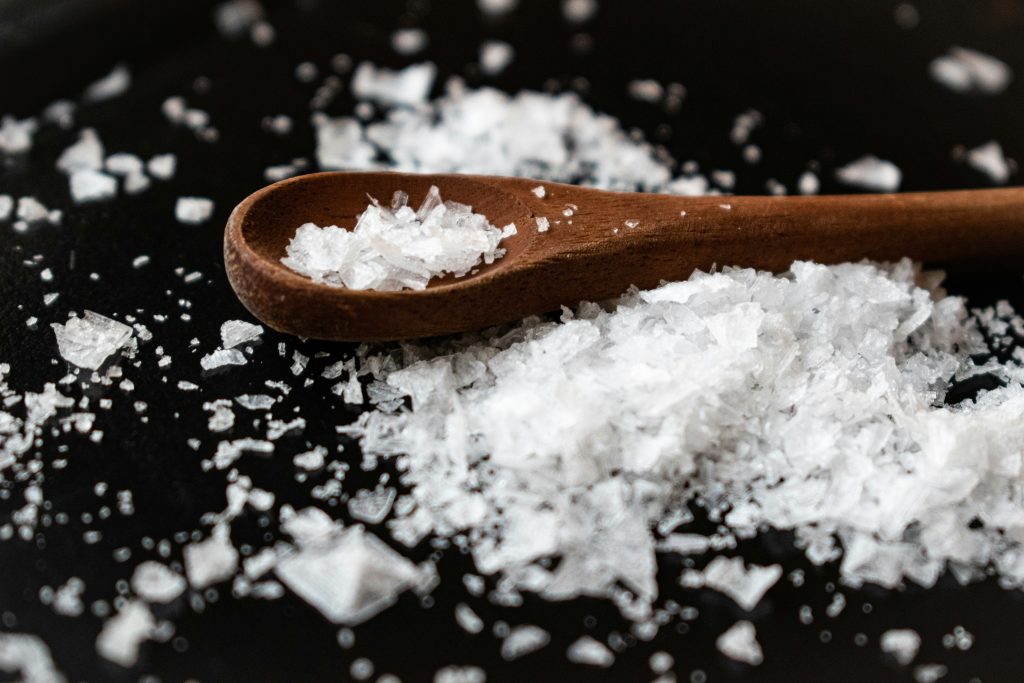
In fact, modern data show that replacing standard table salt (sodium chloride) with MSG (monosodium glutamate) can slash your overall sodium intake by up to 30% because MSG delivers a massive burst of savory umami flavor with significantly less actual sodium.
Ultimately, the global legends surrounding our favorite vegetables prove that the stories behind our food are often far more about clever human marketing than actual biological superpowers. Whether it is a top-secret World War II radar cover-up painting carrots as the ultimate night-vision tool, or a 19th-century German decimal point typo inflating the iron power of spinach, these dietary fables have completely rewritten our grocery lists for generations.
While your veggies won’t grant you X-ray eyesight or instant Popeye muscles, they are still absolute rockstars for your baseline health. Just remember to take the playground myths with a healthy pinch of MSG.